
Wingers and inside-forwards look similar on a team sheet. Both start wide, both attack. On the pitch they are two different jobs with different skills, and the difference shapes how a whole team goes forward.
I spent most of my playing career on the wing before a knee injury finished me, so this comparison is personal. Here is what actually separates the two roles: the tactics, the player types, and what each one gives a team.
Key Takeaways
| Aspect | Winger | Inside-Forward |
|---|---|---|
| Primary focus | Width, pace, crosses | Goal scoring, combination play |
| Typical position | Close to the sidelines, exploiting the flanks | In the half-spaces, closer to the center |
| Main responsibilities | Stretching the defense, delivering crosses, winning one-on-ones | Exploiting gaps in defense, joining passing sequences |
| Key attributes | Pace, dribbling, crossing ability | Goal-scoring ability, creativity, positional intelligence |
| Tactical setup | Essential in formations like 4-3-3 and 3-4-3 | Thrives in setups like 4-3-1-2 and 4-2-3-1 |
| Player examples | Mohamed Salah, Raheem Sterling: pace, agility, crossing | Lionel Messi, Thomas Müller: goals, creativity, spatial intelligence |
What is a Winger?
A winger lives in the wide channels. The job is to drive at defenders from the flanks, use pace and trickery to get past the full-back, and make things happen in the final third.


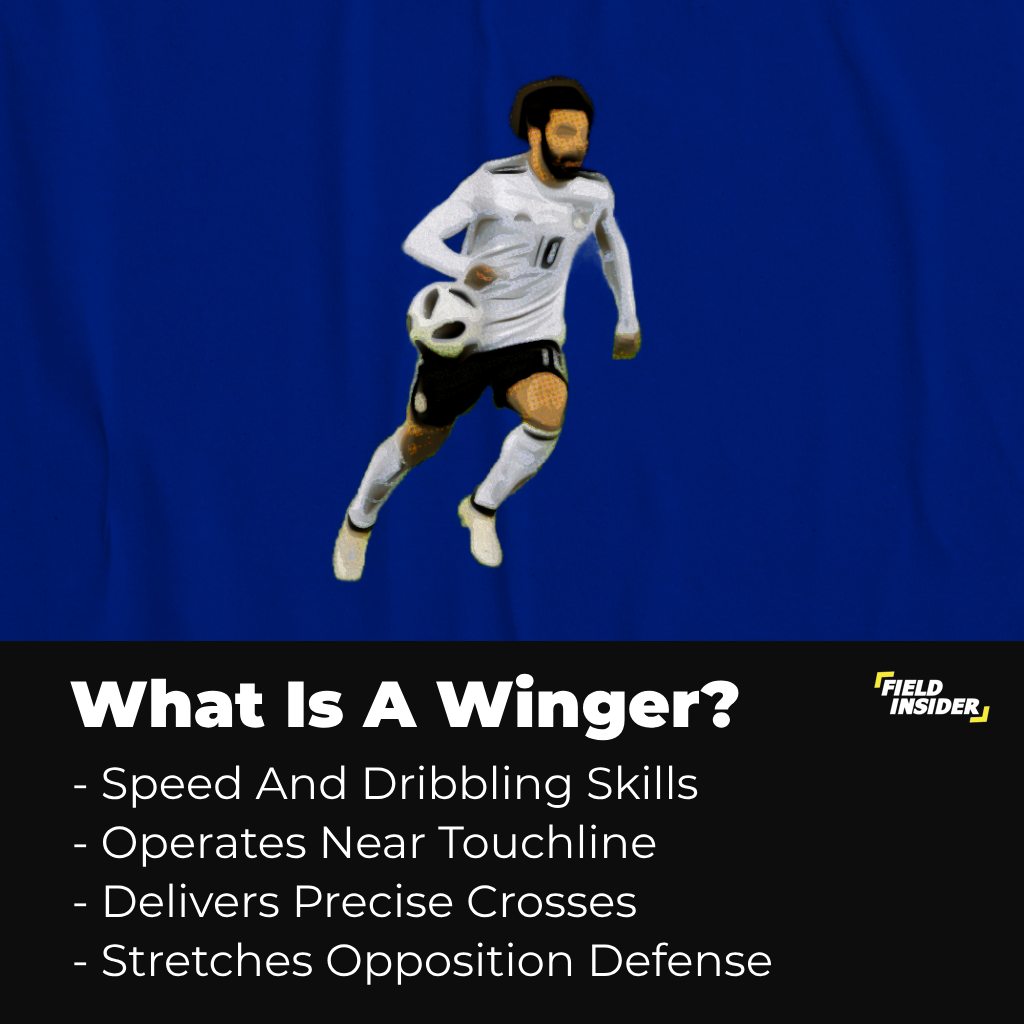
It is one of the most watchable roles in the game, and one of the most demanding.
The Evolution of the Winger Role
The old-school winger had one task: get chalk on your boots, reach the byline, put crosses in for the centre-forward. That job still exists, but it has grown. Modern wingers cut inside and shoot, combine through the middle, and track back to help their full-back.
The position has simply adapted to a faster, more physical game.
What is an Inside-Forward in Soccer?
An inside-forward is half midfielder, half striker. They start wide on paper but do their damage between the opposition's midfield and defensive lines, breaking through to score or slipping teammates in behind.
The Role's Evolution and Significance
Inside-forwards date back to the old five-man forward lines. The modern version inherits that legacy, combining a striker's instincts with a playmaker's touch.
Their home is the half-space. Receive the ball there with a good first touch and you have a direct route to goal, while dragging defenders out of position for everyone else.
Primary Focus: Winger vs Inside-Forward
Wingers: Masters of the Flanks
A winger's first job is width. Hug the touchline and the back four has to stretch to cover you, which opens space through the middle for teammates. Even in games where I barely saw the ball, staying wide was doing work.
Crossing, dribbling and speed are the tools. Formations like the 4-3-3 or 3-4-3 are built around wingers doing exactly this.
Inside-Forwards: The Goal Threat from Within
Inside-forwards go the other way: from the flank into central areas, hunting pockets of space where they can receive the ball facing goal. The role asks for a genuine eye for goal, plus the ability to link play and drop deeper to collect the ball.
Setups like the 4-2-3-1 or 4-3-1-2 get the most out of them, putting them in positions to influence the game right in front of goal.
Typical Position: Winger vs Inside-Forward
Wingers: Exploiting the Flanks
Wingers are usually the widest players on the pitch. That positioning forces defenders to cover more ground and opens gaps in the defensive line.
It also sets up the one-on-one against the full-back, which is the winger's bread and butter. Win that duel a few times and the defender starts backing off, and then the whole flank belongs to you.
Inside-Forwards: The Central Threat
Inside-forwards start wide and drift in, taking up positions in the half-spaces between the opponent's midfield and defence. From there they receive the ball already oriented towards goal, ready to shoot or slide a pass through the defensive structure.
Formations such as the 4-3-1-2 or 4-2-3-1 give them the licence to roam into those zones.
Main Responsibilities: Winger vs Inside-Forward
Wingers: The Art of Width and Crosses
Beyond holding width, wingers are there to pull defences apart and deliver. Keeping the pitch big creates the spaces midfielders and strikers exploit.
Accurate crossing matters enormously for teams with an aerial threat up front, or teams that thrive on chaos in a crowded penalty area.
Inside-Forwards: Combination Play and Goal Scoring
The inside-forward's job list is longer: score goals, yes, but also drop deep or move laterally to link play and join the passing moves that break teams down. It demands technique, awareness of space, and calm execution under pressure.
Teams in a 4-3-1-2 or a 4-2-3-1 lean on their inside-forwards for exactly these moments.
Key Attributes: Winger vs Inside-Forward
Wingers: Speed, Dribbling, and Crossing
Pace comes first. It wins counter-attacks and punishes any full-back caught upfield. Then dribbling, because you will face one-on-ones all day.
Then crossing, because beating your man means nothing if the delivery is poor. My old coach used to say a bad cross wastes ten good sprints, and he was right.
Inside-Forwards: Goal Scoring, Creativity, Positional Intelligence
The inside-forward's defining trait is the goal instinct: reading the play and being in the right spot before the chance arrives.
Creativity matters because they work in tight spaces and have to invent openings. And positional intelligence lets them drift between the lines unnoticed until it is too late for the defence to react.
Efficacy of Wingers in Modern Soccer
The chart below visualizes findings from a study named "A Statistical Analysis of Inverted Wingers in Soccer", comparing the scoring output of inverted and non-inverted wingers.
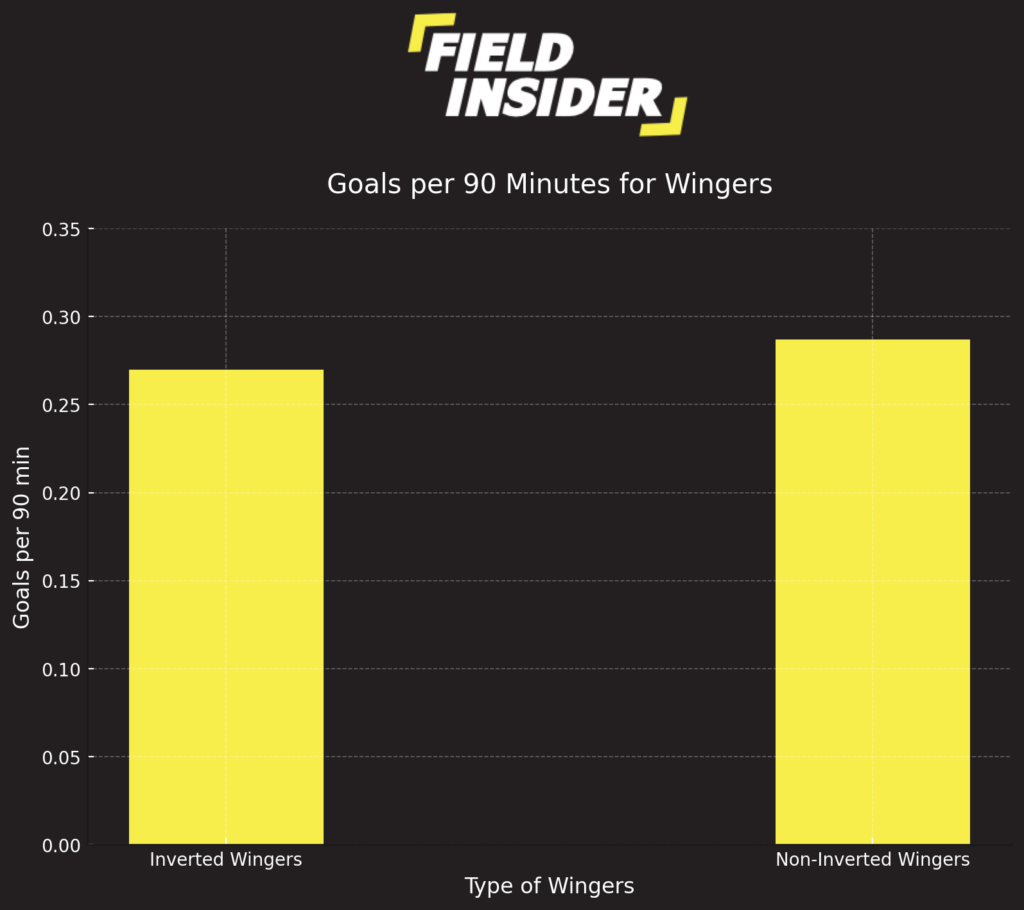
Source: Universiteit Utrecht
Traditional wingers averaged 0.287 goals per 90 minutes against 0.270 for inverted ones. A plausible reading: the traditional winger attacks down the outside where there is room, while the inverted winger cuts into the most congested part of the pitch.
It is a small gap, but the kind coaches weigh when choosing which type of wide player fits their plan.
Tactical Setup: Winger vs Inside-Forward
Winger's Role in Formations
In a 4-3-3 formation, the wingers supply the width that stretches defences and frees the midfield to operate. In a 3-4-3 formation they do the same job with more defensive homework, tracking back to support the midfield.
Both systems live and die on their wingers' pace, dribbling and delivery.
Inside-Forward's Role in Formations
The 4-2-3-1 formation is the classic home for inside-forwards, letting them cut in from the wings, exploit the spaces between the lines, and create overloads in central areas.
The 4-3-1-2 works too, even without traditional wide men, when the wide midfielders or full-backs push forward to provide the width instead.
Player Profiles and Examples
Notable Wingers
| Player Name | Team(s) | Playing Style | Contributions |
|---|---|---|---|
| Mohamed Salah | Liverpool | Fast, technically skilled, adept at cutting in and finishing. | Prolific goal-scorer, crucial in Liverpool's attack. |
| Raheem Sterling | Chelsea | Agile, quick, excellent dribbler, sharp in front of goal. | Vital for creating and converting scoring opportunities. |
| Jadon Sancho | Borussia Dortmund/Manchester United | Creative, excellent dribbling and vision, precise in crossing. | Known for significant assists and breaking defenses. |
| Neymar Jr. | Al Hilal | Expert dribbler, creative playmaker, effective scorer. | Key in build-up play and finishing chances. |
| Kylian Mbappé | Paris Saint-Germain | Explosive speed, clinical finisher, excellent movement. | Leads PSG's attack with goals and assists. |
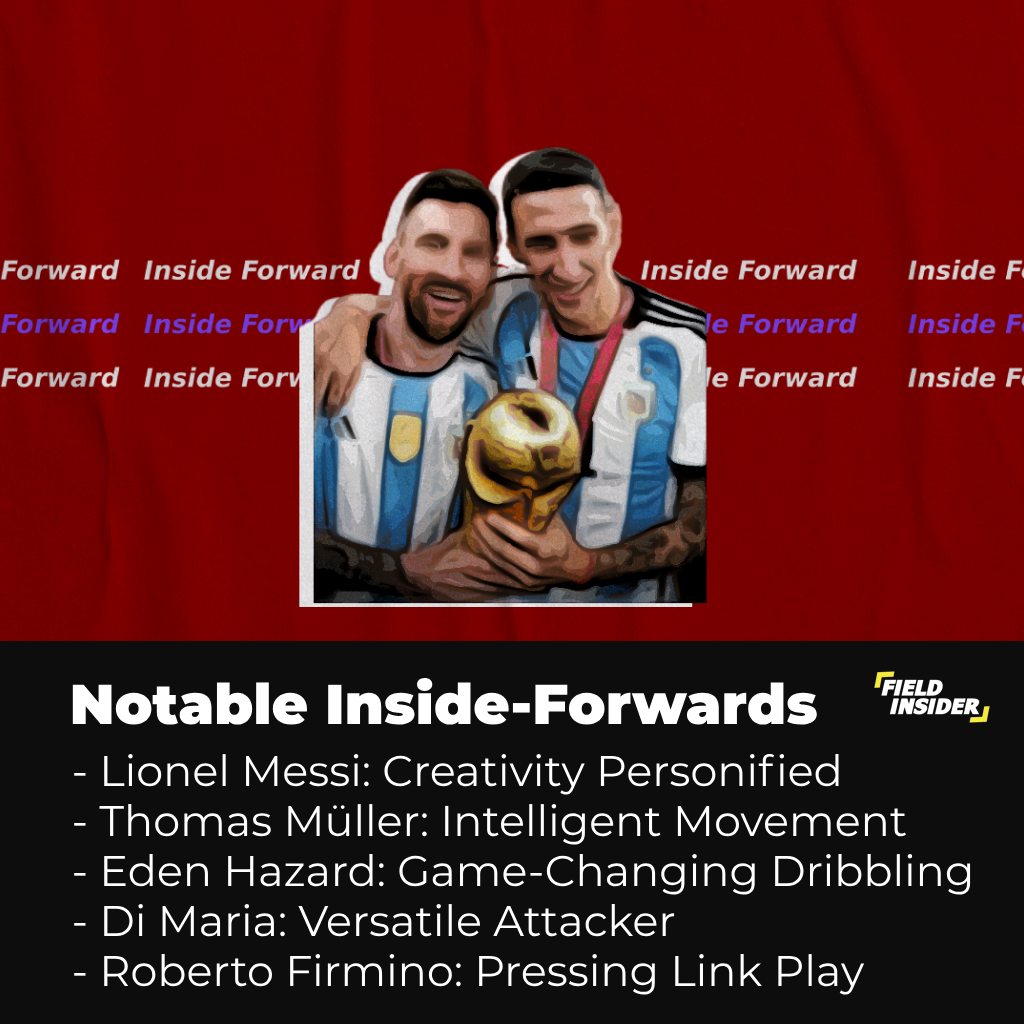
Notable Inside-Forwards
| Player Name | Team(s) | Playing Style | Contributions |
|---|---|---|---|
| Lionel Messi | Inter Miami | Exceptional dribbling, vision, and finishing; creativity personified. | Dominates games with goals, assists, and playmaking. |
| Thomas Müller | Bayern Munich | Spatial awareness, intelligent movement, versatile attacker. | Master of finding and exploiting spaces; key assists and goals. |
| Eden Hazard | Retired | Dribbling, acceleration, and the ability to change the game. | Drives attacks with skillful play and crucial goals. |
| Di Maria | SL Benfica | Excellent crossing, precise left foot, versatile attacking roles. | Key player in creating opportunities and scoring. |
| Roberto Firmino | Al Ahli | Work rate, pressing, and linking play; not a traditional forward. | Essential in Liverpool's fluid attacking system; goals and assists. |
Conclusion
Both roles get you to goal, just by different roads. The winger stretches the game and attacks the outside; the inside-forward sharpens it and attacks the gaps. Knowing the difference helps coaches pick a system, players understand where they fit, and fans see why their team's attack looks the way it does.
The line between the two keeps blurring, and most top wide players today can do both jobs. That tells you plenty about where the game is heading.